Trace the sky
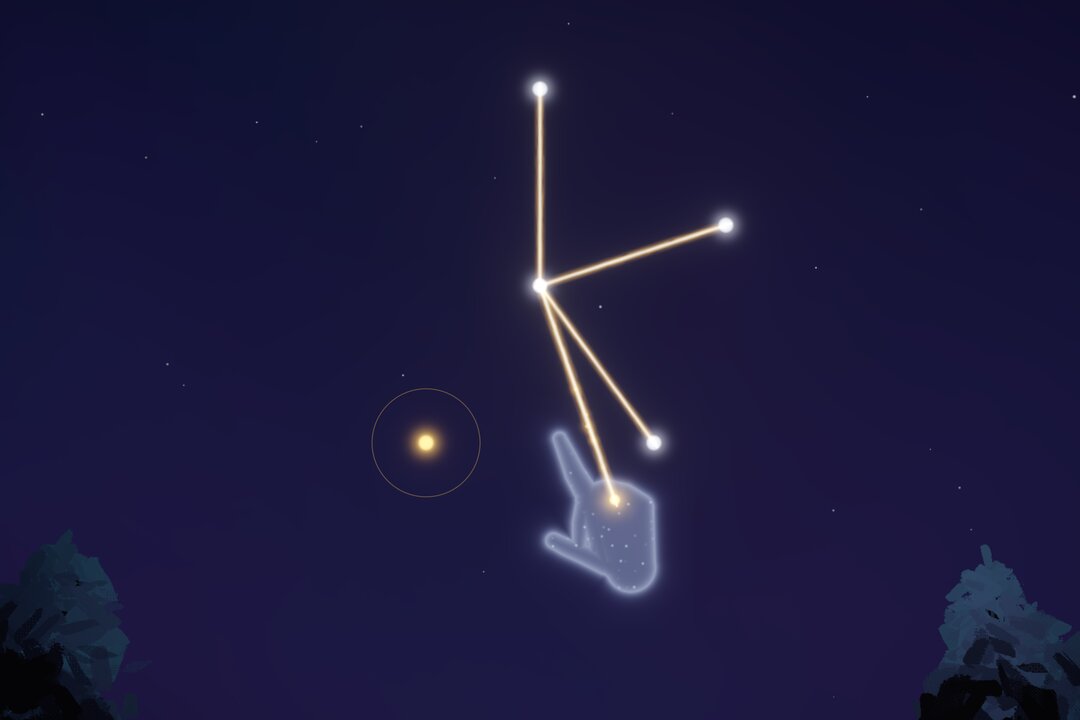
Look up at the night sky over the forest and join the glowing stars one by one until a picture paints itself in.
What it records
| Measure | What it is | In the catalog |
|---|---|---|
| Accuracy | Answers that were right. | Response Accuracy |
| Help needed | How much help each answer took. | Prompt Level Required |
| Smoothness | How smooth a trace or reach is, rather than jerky. | Movement Smoothness (SPARC) |
| Staying on the line | How far the hand strayed from the line it traced. | Path Deviation |
| Reaction time | How quickly a response comes after a target appears. | Reaction Time (mean) |
| Aim | How far from the centre a touch or reach landed. | Targeting Precision |
| Steps in order | Multi-step actions done in the right order. | Sequence Accuracy |
| Changing course | Wrong choices noticed and left before answering. | Correction Rate |
| Getting started | Time to start after an instruction ends. | Initiation Latency |
| Trying again | Misses followed by another try. | Persistence |
| Time on task | How long hands or gaze stay on the activity. | Attention Dwell |
What therapists use it for
OT · Fingers
Pre-writing strokes: a steady line from point to point
Trace the sky joins stars into a picture with one fingertip on a tablet, the line kept on the path between them.
RecordedStaying on the lineSmoothnessAimOT · Eyes
Visual-motor integration: seeing the next target and reaching it
In Trace the sky the next star shows where the picture goes; the child finds it and touches it, and every touch is timed and placed.
RecordedReaction timeAimAccuracyABA · Mind
Starting on cue and staying with the task
Trace the sky waits for the first move after each instruction, and notes how long the hand stays on the activity and whether a miss is tried again.
RecordedGetting startedTime on taskTrying again